The COVID-19 pandemic has exposed existing inequalities in the global health architecture that existed prior to the pandemic. These inequalities have in turn contributed to disparities in access to vaccines and other tools and disruptions as well as backsliding of essential primary health care (PHC) services, reversing decades of progress in global health. In addition to the indirect impacts of the pandemic efforts to curb it, including the COVID-19 vaccine rollout, have highlighted the...
When the rapid spread of SARS-CoV-2 brought the world to a standstill in 2020, immunisation programmes worldwide were disrupted like almost every other health programme. The disruption was mainly due to the understandable diversion of resources to tackling the COVID-19 pandemic as well as mobility restrictions stopping people from accessing healthcare or health workers reaching out to populations that are marginalised.
Since efforts to eradicate polio began in 1988, the world has made remarkable progress; reducing the number of cases by over 99%. With the WHO African region being certified free of wild poliovirus as of August 2020, wild polio now remains in two countries; Afghanistan and Pakistan. However, all health systems have felt the devastating...
The world is on the verge of eradicating polio completely, but it is important that we do not become complacent and allow a resurgence of polio to occur.
The COVID-19 pandemic has meant life-saving polio immunisation efforts have been halted, despite the fact that many countries were already at risk of the disease returning. However, this can, and must be prevented, and the global eradication effort also presents a unique opportunity to leave a lasting legacy in the fight against...
After the success of the Global Vaccine Summit 2020, we turn our attention to Gavi 5.0, which between 2021-2025 will aim to immunise an additional 300 million children with an emphasis of reaching children left furthest behind.
To maximise the impact of Gavi 5.0, we require renewed and improved policies on equity, transition, CSO engagement and access, whilst making tangible commitments to ensuring the immunisation lies at heart of efforts to strengthen Primary Health Care (...
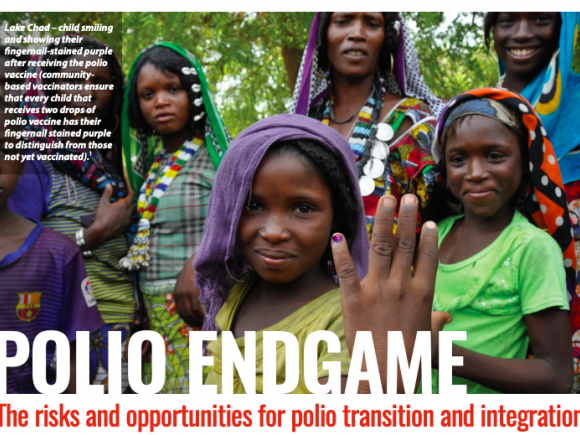
Global polio funding is changing and countries have been developing plans to ensure they can continue essential polio and immunisation systems when funding ends. RESULTS UK and ACTION have reviewed the seven publicly available country polio transition plans to assess progress on transition planning and to highlight risks, challenges, and ambition within the polio transition process. The review focuses at country-level as it is the decisions made here that impact most on whether children are...
Vaccines not only save lives but are central to global health security and are a fundamental component for achieving several of the United Nations Sustainable Development Goals. But despite the known value of vaccines and great advances in research and development, millions...
Only 7% children in the world’s poorest countries receive all 11 WHO recommended vaccines. Despite impressive progress on global immunisation coverage rates, too many children are still being left behind. Polio transition poses a unique opportunity to reinforce immunisation systems and turn a situation with great risk into one that leaves a positive legacy on child and global health. It is an opportunity that cannot be missed. The WHO Strategic Action Plan (the Plan) must set out how the WHO...
As the Global Polio Eradication Initiative (GPEI) winds down, the 16 countries that receive 95% of GPEI’s support will face significant challenges from decreased funding over the next three years. Addressing and overcoming these challenges must be an urgent political priority which, if left unresolved, could have a devastating effect on immunisation and health systems.
Using case studies from Nigeria and Pakistan, A Balancing Act explores country-specific and global...
Immunisation rates are higher than they have ever been, reaching 86% in 2015. However, one in seven children are still missing out of the most basic vaccines and many more are missing out on the full range of recommended vaccines. In 2012 all WHO member states agreed to ambitious immunisation goals to drive global progress towards universal immunisation coverage, but as we stand in 2017, we are dramatically off track. How can country ownership can help turn immunisation commitments into action...
RESULTS UK is a charity registered as RESULTS Education in England and Wales (1015286), a company limited by guarantee (2761858), and a charity registered in Scotland (SC041481).